




The digital world has no borders, and neither does the theft of intellectual property. For an Indian business—whether it is an EdTech platform, a media house, or a software developer—the realization that their proprietary content has been stolen and hosted on an offshore server is a common and devastating experience. To fight this global threat, businesses rely on a powerful international tool: the DMCA takedown. However, for many businesses in the subcontinent, the question remains: What is a DMCA takedown and how does it work in India? This guide provides a comprehensive overview of this critical legal instrument and how to leverage it to protect your digital assets.
What is a DMCA Takedown?
The Digital Millennium Copyright Act (DMCA) is a United States copyright law enacted in 1998. One of its most important provisions is the “Notice and Takedown” system. This system allows copyright owners to notify online service providers (like web hosts, search engines, and social media platforms) that they are hosting or linking to infringing content. Under the DMCA, the service provider must “expeditiously” remove or disable access to the content to maintain their “safe harbor” protection against being held liable for the copyright infringement themselves.
Why Does a US Law Apply to Indian Businesses?
You might wonder why an Indian business should care about a United States law. The reason is rooted in the global nature of internet infrastructure. A vast majority of the world’s leading digital platforms—including Google, YouTube, Facebook, Instagram, LinkedIn, Amazon Web Services (AWS), and most major domain registrars—are headquartered in the US.
Because these companies are governed by US law, they are legally obligated to follow the DMCA takedown process, regardless of where the copyright owner is located. Therefore, an Indian EdTech company whose course has been stolen can use a DMCA notice to force a US-based hosting company to delete the pirated files or compel Google to remove the pirate site from its search results.
The Mechanics: How the DMCA Process Works
The DMCA process is designed to be relatively straightforward, but it requires absolute precision to be legally effective. It follows a specific sequence of actions:
1. Discovery of the Infringement
The process begins when a copyright owner identifies their content being used without authorization on a third-party platform. This could be a stolen video on a tube site, a pirated PDF on a file-sharing forum, or a cracked software tool on a torrent site.
2. Identification of the Service Provider
The copyright owner must identify who is responsible for the platform. This isn’t the pirate themselves, but the service provider (the ISP, web host, or search engine). Professionals use specialized tools to bypass proxy services like Cloudflare to find the true hosting provider.
3. Submission of the Takedown Notice
A formal DMCA notice must be sent to the service provider’s designated agent. To be valid, the notice must contain:
- Identification of the copyrighted work.
- Identification of the infringing material (the specific URL).
- A statement of “good faith” belief that the use is unauthorized.
- A statement of accuracy, under penalty of perjury.
- The signature and contact information of the rights holder.
4. Expeditious Removal
Once the provider receives a valid notice, they are legally required to remove or block access to the material immediately. They then notify the user who posted the content that it has been removed.
5. The Counter-Notice Provision
The user who posted the content has the right to file a “counter-notice” if they believe the content was removed by mistake (e.g., it was Fair Use). If a counter-notice is filed, the service provider must notify the copyright owner. The owner then has 10-14 business days to provide evidence that they have filed a lawsuit against the user. If no evidence is provided, the provider may restore the content.
The Challenges of DMCA Enforcement for Indian Companies
While the process sounds simple, executing it effectively from India presents several challenges for internal teams:
- The Speed Gap: Pirates use automated scripts to re-upload content the moment it is taken down. Manual reporting cannot keep up with this “whack-a-mole” reality.
- Language and Legal Nuance: DMCA notices must be perfectly drafted. Minor technical errors can lead to the notice being rejected, causing delays that cost the business revenue.
- Global Jurisdiction: Dealing with hosting providers across different time zones and jurisdictions requires specialized expertise and established relationships that most Indian businesses lack.
How TrustNet Security Simplifies DMCA Enforcement
Protecting your global digital footprint requires an elite partner who can handle the technical and legal complexities of the DMCA process. TrustNet Security operates as the premier enforcement arm for Indian enterprises, EdTech platforms, and digital brands demanding absolute protection for their intellectual property.
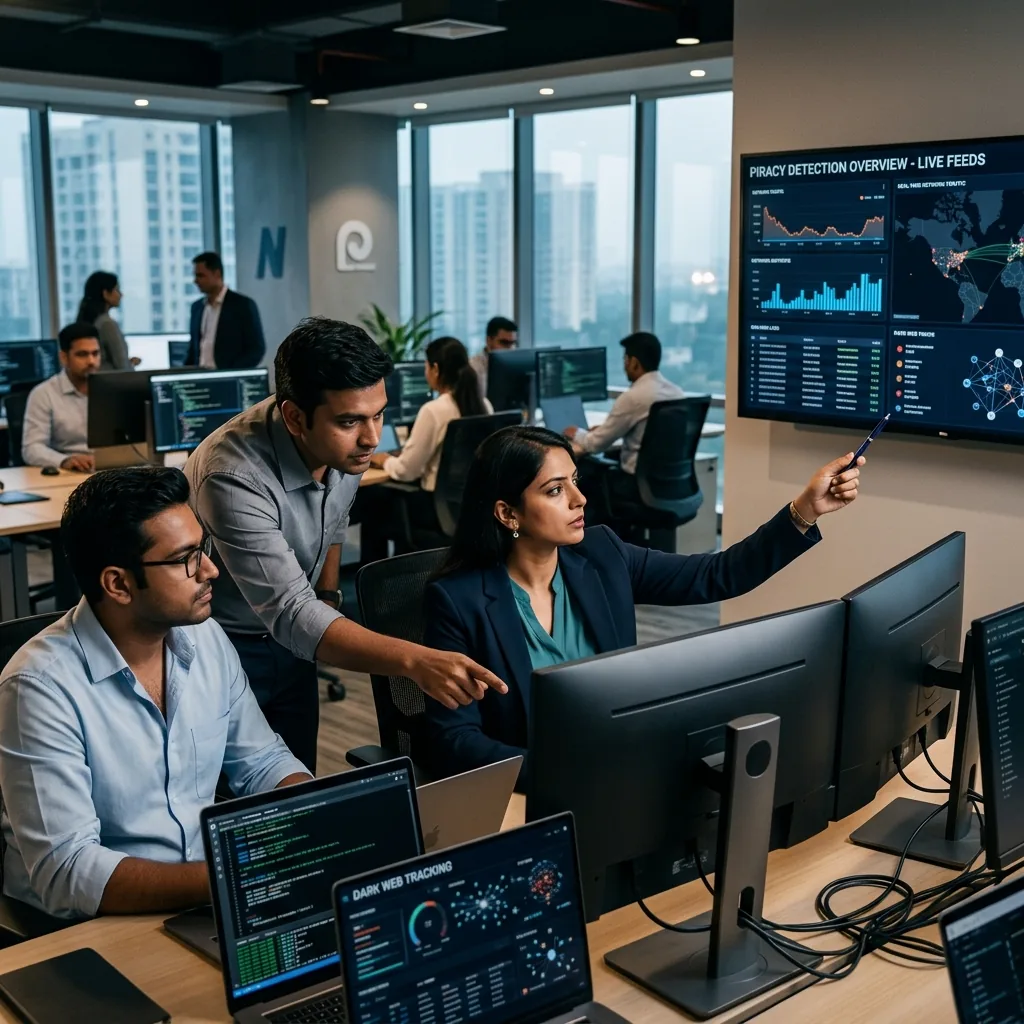
We provide a fully managed, automated DMCA takedown service. By partnering with TrustNet Security, your internal teams never have to fill out another frustrating webform. Our proprietary AI surveillance engine casts a global net, continuously hunting for unauthorized distributions of your digital assets across the open web, deep web, and encrypted networks like Telegram.
Crucially, TrustNet Security manages the entire enforcement lifecycle. Our expert digital threat analysts leverage our unparalleled global network of priority escalation channels and “trusted flagger” status to execute devastatingly fast, legally compliant DMCA takedowns. We force search engines to de-index pirate hubs and compel hosting providers worldwide to delete your stolen files. By entrusting your digital rights management to TrustNet Security, you guarantee that your premium content remains exclusive, securing your revenue and ensuring your brand operates with absolute digital security on the global stage.
Conclusion
The DMCA takedown is an essential tool for any Indian business operating in the digital economy. It provides a legal mechanism to protect your intellectual property from global theft, even when the pirates are located halfway around the world. However, the effectiveness of the DMCA depends on speed, accuracy, and persistence. By partnering with professional DMCA takedown services, Indian businesses can transition from a state of vulnerability to a posture of proactive, automated dominance, ensuring their innovation remains their exclusive property.
Share it:
