






Introduction: The Hidden Cost of Educational Content Leaks
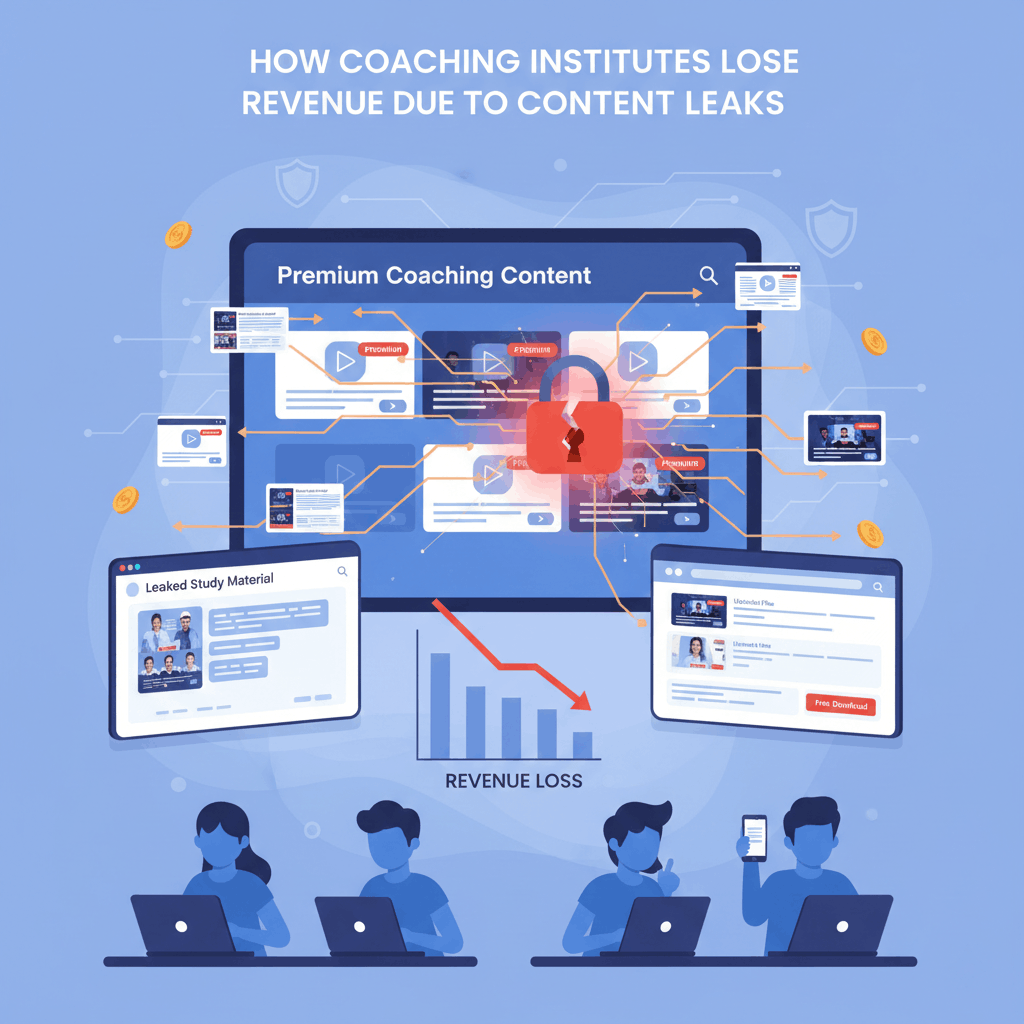
In the digital education era, coaching institutes heavily rely on paid video lectures, study materials, and exclusive test series. However, content leaks have become one of the biggest threats to their business model. When premium coaching videos or notes are leaked online, institutes not only lose revenue but also suffer long-term brand damage. Content leaks on platforms like Telegram, Google Drive, and piracy websites make paid courses easily accessible for free, reducing enrollments and trust. Understanding how these leaks affect revenue is essential for institutes that want to protect their digital assets and maintain sustainable growth.
What Are Content Leaks in the Coaching Industry?
Content leaks refer to unauthorized sharing of paid educational material such as recorded lectures, PDFs, mock tests, and live class recordings. These materials are often redistributed through piracy networks, private groups, and file-sharing platforms without the institute’s permission. Keywords like pirated coaching videos, course content leak, online course piracy, and Telegram course sharing have become increasingly common due to this growing issue.
Direct Revenue Loss from Pirated Course Distribution
The most immediate impact of content leaks is direct revenue loss. When students find leaked content online, they prefer free access instead of paying for official courses. This significantly reduces new enrollments and subscription renewals. Imagine investing months into creating a premium course, only to see it shared for free within days. This scenario not only affects current sales but also future launches, as leaked content remains available indefinitely on multiple platforms.
Decline in Course Enrollments and Conversions
Leaked content reduces the urgency for students to purchase courses. If learners know they can access the same lectures through pirated links, they hesitate to enroll officially. This directly impacts conversion rates from marketing campaigns, webinars, and sales funnels. Over time, institutes may see high traffic on promotional pages but low actual purchases due to widespread availability of leaked content.
Damage to Brand Value and Market Position
Content leaks do more than just reduce revenue; they damage brand perception. When pirated videos circulate, they are often edited, incomplete, or uploaded in poor quality. Students who watch such versions may assume that the institute’s teaching quality is low, which negatively affects brand reputation. This perception gap can push potential students toward competitors who appear more secure and professional.
Loss of Competitive Advantage in the Education Market
Coaching institutes invest heavily in research, faculty expertise, and course structure to stay ahead of competitors. When their proprietary content is leaked, competitors and unauthorized educators can misuse the same material to create similar courses. This erodes the institute’s competitive edge and makes it difficult to maintain premium pricing or exclusivity.
Operational and Legal Costs Due to Piracy
Fighting content leaks requires time, effort, and legal expenses. Institutes often have to monitor multiple platforms, send takedown requests, and follow up with repeated violations. These operational efforts increase costs while providing no direct revenue return. Additionally, without proper legal enforcement, piracy continues to grow, making manual action inefficient and unsustainable.
Long-Term Impact on Subscription-Based Learning Models
Many coaching institutes now operate on subscription-based models where students pay monthly or yearly fees. Content leaks disrupt this model because once videos are leaked, students cancel subscriptions and rely on pirated libraries. This creates unstable recurring revenue and makes financial forecasting difficult for the institute.
Psychological Impact on Educators and Content Creators
Beyond financial loss, content leaks demotivate educators who put immense effort into designing high-quality lessons. Seeing their intellectual property stolen and distributed freely reduces morale and discourages innovation. Over time, this can affect the overall quality of educational content produced by the institute.
How Content Leaks Spread Rapidly Across Platforms
Content leaks rarely stay confined to one platform. A single leaked video can quickly spread across Telegram channels, torrent sites, cloud drives, and social media groups. This viral distribution multiplies the damage and makes removal more complex. Without active anti-piracy monitoring, leaked content can remain accessible for months or even years.
How TrustNet Security Helps Prevent Revenue Loss from Content Leaks
TrustNet Security provides specialized anti-piracy and brand protection services designed for coaching institutes and online educators. Their solutions focus on detecting leaked course content early and removing it before it spreads widely.
Real-Time Monitoring of Piracy Platforms
TrustNet continuously scans Telegram channels, websites, and social media platforms using advanced keyword tracking and content fingerprinting. This ensures early detection of leaked coaching videos and study materials.
Fast DMCA Takedown and Legal Enforcement
Once leaked content is identified, TrustNet initiates DMCA takedown notices and copyright enforcement actions. This results in quick removal of pirated videos, protecting course sales and premium access revenue.
Protection Against Re-Uploads and Repeat Violations
Pirates often re-upload the same content under new links or channels. TrustNet provides continuous monitoring and repeat enforcement to ensure that removed content does not resurface, maintaining long-term digital security for coaching institutes.
Preventive Measures Coaching Institutes Should Implement
Institutes should adopt preventive strategies such as watermarking videos, using secure learning management systems, and limiting download permissions. Regular piracy audits and awareness campaigns among students can also reduce intentional or accidental leaks. Combining these internal measures with professional anti-piracy services creates a strong defense against revenue loss.
Conclusion: Protecting Educational Revenue in the Digital Age
Content leaks are a silent but powerful threat to coaching institutes, affecting enrollments, brand value, and long-term profitability. In a competitive online education market, even small leaks can lead to significant financial damage. By implementing strong digital security measures and partnering with expert brand protection services like TrustNet Security, institutes can safeguard their intellectual property, maintain student trust, and ensure steady revenue growth despite rising piracy challenges.
