





Introduction: The Growing Threat of Pre-Release Movie Piracy
Movie piracy has evolved into a sophisticated digital crime, and one of the most alarming trends today is the leak of pirated movies online even before their official release. For filmmakers and production houses, this feels like opening night being ruined before the curtains even rise. Pre-release leaks can severely damage box office collections, OTT viewership, and brand reputation. Understanding how these leaks happen is the first step toward preventing them and protecting valuable intellectual property.
Why Pre-Release Movie Leaks Are Increasing
The entertainment industry has become more digital than ever. Movies are now shared across multiple platforms during production, editing, distribution, and marketing stages. This increased digital exposure creates multiple weak points where content can be stolen. Cybercriminals exploit these vulnerabilities using advanced piracy networks, encrypted sharing tools, and anonymous file-hosting platforms.
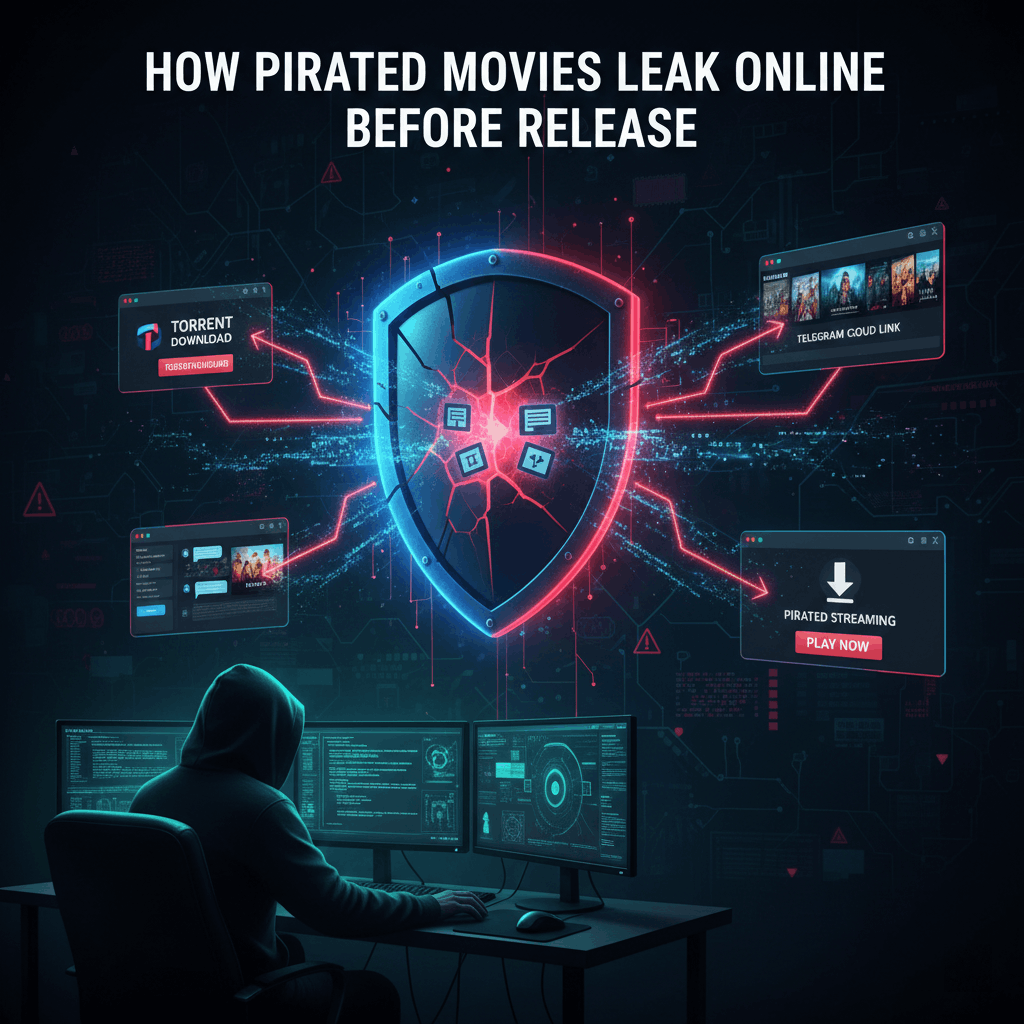
With the rise of high-speed internet and messaging apps, pirated movie downloads spread within hours. Once leaked, the movie is copied endlessly across torrent sites, Telegram channels, and illegal streaming platforms, making damage control extremely difficult.
Common Sources of Movie Leaks Before Release
1. Insider Leaks from Production Teams
One of the biggest causes of pre-release piracy is internal leaks. Movies pass through multiple hands during editing, dubbing, visual effects, and post-production. If even one insider shares a copy illegally, it can quickly spread online. Sometimes these leaks happen due to negligence, while other times they occur intentionally for financial gain.
2. Screeners Sent for Review and Certification
Before release, movies are shared with censorship boards, distributors, and critics. These screeners are meant for review purposes only, but if security measures are weak, copies can be duplicated and uploaded illegally. This is one of the most common reasons why pirated movies appear online before release dates.
3. Hacking of Post-Production Studios
Post-production studios store high-quality movie files on servers. Hackers target these servers using phishing attacks, malware, or data breaches. Once they gain access, they steal unreleased movie files and distribute them on piracy networks.
4. OTT Platform Security Vulnerabilities
Sometimes movies meant for OTT release are leaked before launch due to security loopholes in streaming platforms. If encryption or access control is weak, cyber pirates can capture and redistribute the content illegally.
How Pirated Movies Spread Online After Leaking
Torrent Websites and Illegal Streaming Platforms
After a leak occurs, pirated movies are quickly uploaded on torrent sites and illegal streaming websites. These platforms allow users to download full HD movies for free, making piracy highly attractive to audiences looking to avoid ticket or subscription costs.
Telegram Channels and Private Groups
Messaging apps play a major role in spreading leaked films. Dedicated piracy channels share download links, compressed files, and streaming copies instantly. Because these groups are often private or encrypted, tracking them becomes challenging for content owners.
Cloud Storage and File-Sharing Links
Piracy networks also use cloud storage links like Google Drive or anonymous hosting services. These links are repeatedly reshared, making it difficult to completely eliminate pirated movie distribution.
Impact of Pre-Release Piracy on the Film Industry
Pre-release piracy can cause huge financial losses. When a movie leaks early, audience excitement decreases, and theatre occupancy drops. Producers lose revenue, distributors suffer losses, and the entire film ecosystem faces a setback. It also discourages investors from funding future projects, affecting creativity and innovation in cinema.
Beyond financial loss, piracy harms the hard work of actors, directors, editors, and technicians who spend years crafting a film. A single leak can undo months of marketing efforts and promotional campaigns.
Warning Signs That a Movie Might Leak Before Release
Production houses should watch for early warning signs such as unauthorized access to movie files, suspicious downloads from internal servers, or unusual activity in file-sharing systems. Monitoring dark web forums and piracy communities can also reveal potential leak threats before they become widespread.
How to Prevent Pre-Release Movie Leaks
Implement Strong Digital Security Measures
Studios must use encrypted file storage, multi-factor authentication, and restricted access controls to protect movie files. Only authorized personnel should have access to sensitive content during production and post-production stages.
Use Digital Watermarking Technology
Watermarking embeds invisible identification codes into movie files. If a leak occurs, the watermark helps trace the exact source of the leak, making it easier to take legal action against the culprit.
Monitor Online Platforms Continuously
Regular monitoring of torrent sites, Telegram groups, and illegal streaming portals helps detect leaked content early. The faster piracy is detected, the quicker it can be removed before reaching a massive audience.
How TrustNet Security Helps Combat Movie Piracy
TrustNet Security provides specialized anti-piracy and brand protection solutions to prevent movie leaks before and after release. Their advanced monitoring tools scan thousands of websites, social media platforms, and messaging channels to detect pirated movie uploads in real time.
They also offer bulk takedown services, legal DMCA notice handling, and digital content tracking to ensure leaked copies are removed quickly. By combining technology-driven monitoring with legal enforcement strategies, TrustNet Security helps production houses safeguard their films and reduce revenue loss caused by piracy.
Conclusion: Staying One Step Ahead of Digital Piracy
Pre-release movie piracy is a serious threat that continues to grow with advancing technology. From insider leaks to hacking attacks and illegal file-sharing networks, movies can leak from multiple points in the distribution chain. However, with strong cybersecurity measures, digital watermarking, continuous monitoring, and professional anti-piracy support, filmmakers can significantly reduce the risk of leaks. Protecting a movie before its release is not just about security—it’s about preserving creativity, investment, and the future of the entertainment industry.
